

AWS Certified AI Practitioner - (AIF-C01) Practice Questions

Preparing for the AWS Certified AI Practitioner (AIF-C01) exam requires more than just theoretical knowledge; it necessitates hands-on experience with real-world scenarios and problem-solving skills. This practice exam is designed to familiarize candidates with the actual types of questions they will encounter, featuring a comprehensive collection of 1,183 practice questions that reflect the breadth and depth of the certification content.
Taking this practice exam provides invaluable exposure to authentic testing conditions, enabling candidates to assess their understanding of key concepts related to AWS AI services, machine learning, and data handling. The detailed feedback also helps identify areas of strength and weakness, allowing for targeted study and improved confidence. By using this practice exam as a self-assessment tool, candidates can gauge their preparedness for the official exam, make informed decisions about their study strategies, and ultimately enhance their chances of success on the AWS Certified AI Practitioner certification journey. Engaging with these realistic practice questions can help solidify knowledge and strategies, making it an essential step in your certification process.
These are independent practice questions modeled on publicly available objectives; they are not official exam questions and are not endorsed by the certification provider. Explanations are intended to teach the reasoning behind each answer.
Read the exam guide, objectives, prerequisites, and study planWelcome to the AWS Certified AI Practitioner (AIF-C01) independent practice questions-and-answers listing page. Here, you will find a comprehensive collection of 1,183 actual practice questions designed to help you prepare for the certification exam. Each question has been carefully curated to reflect the knowledge areas and skills evaluated in the certification, enabling you to familiarize yourself with the types of content you are likely to encounter.
To make the most of this resource, review the questions in a structured manner, testing your knowledge and identifying areas that require more focus. Engage actively by attempting to answer questions without looking at the provided answers first, and then review your responses to reinforce your understanding. Additionally, consider using spaced repetition techniques for memorizing concepts and terminologies that are crucial for the exam.
As you prepare, ensure you have a well-rounded approach to studying. Here are a few tips to help you pass the AWS Certified AI Practitioner exam:
1. Understand Core Concepts: Build a solid foundation in machine learning principles and AWS AI services. Focus on understanding how they are applied in real-world scenarios.
2. Hands-On Experience: Gain practical experience by working directly with AWS tools and services. This will help you grasp the functionalities and applications of AI-related services you are expected to know.
3. Simulate Exam Conditions: Take practice exams under timed conditions to get accustomed to the pressure of the actual test environment, which can enhance your performance on exam day.
Utilize this page as a valuable study tool, and best of luck as you work towards your certification!
Question 1 Single Choice
A company has deployed several machine learning models on Amazon Bedrock to provide real-time predictions and analytics for its clients. To maintain operational transparency and ensure compliance with regulatory requirements, the company needs to monitor the input data sent to these models and the output responses generated. This monitoring is crucial for tracking usage, auditing access patterns, and troubleshooting any issues that may arise during model execution. The company is looking for a solution that provides detailed visibility into all model invocations to maintain effective oversight.
Which of the following solutions would be the most suitable for achieving this goal?

 via -
via - Question 2 Single Choice
A developer is working on an AI application for predicting customer churn. The developer is collaborating with a research team to ensure the best model is selected for the application. The application needs to accurately identify customers who are likely to leave the service within the next six months.
What should the developer ask the research team to do in order to ensure that the best model is selected for the AI application?
Question 3 Single Choice
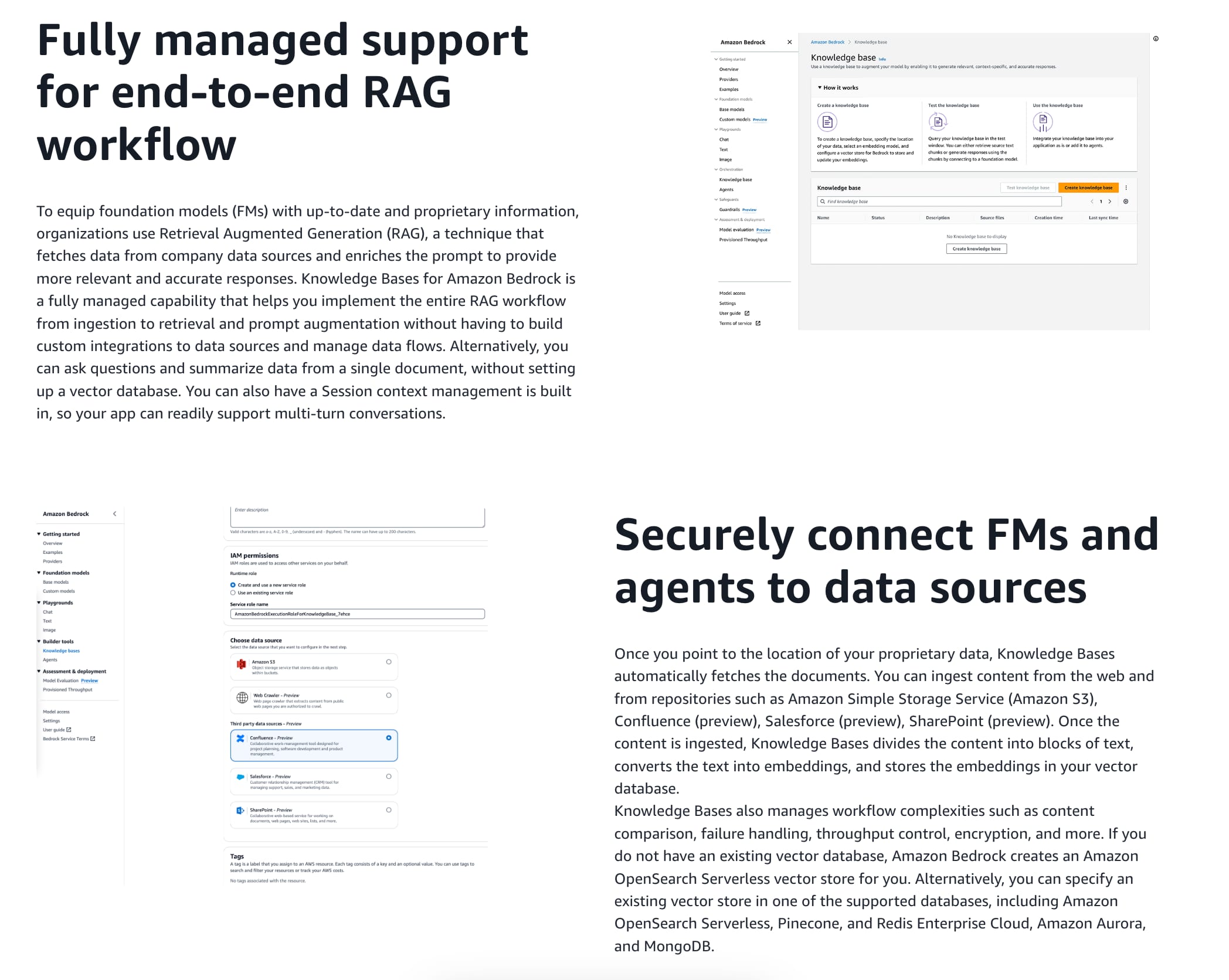
A data analytics company is developing a knowledge management system using Amazon Bedrock to power its AI-driven insights. As part of this project, the company needs to store and retrieve embeddings efficiently for a variety of use cases, including natural language processing and document search. To ensure optimal performance, they want to understand which vector database is natively supported by Knowledge Bases in Amazon Bedrock for storing and managing these embeddings.
Which is the default vector database supported by Knowledge Bases for Amazon Bedrock?
 via -
via - Question 4 Single Choice
A content marketing company is using a generative AI model to automatically draft articles, social media posts, and product descriptions. As the team feeds various text inputs into the model, they notice that the AI can only consider a certain amount of text at once before generating its response. They want to understand the concept that determines this limit, as it affects the length and complexity of the inputs the model can effectively handle.
What is this concept called that defines the maximum amount of text or characters the AI model can process at one time?
 via -
via - Question 5 Single Choice
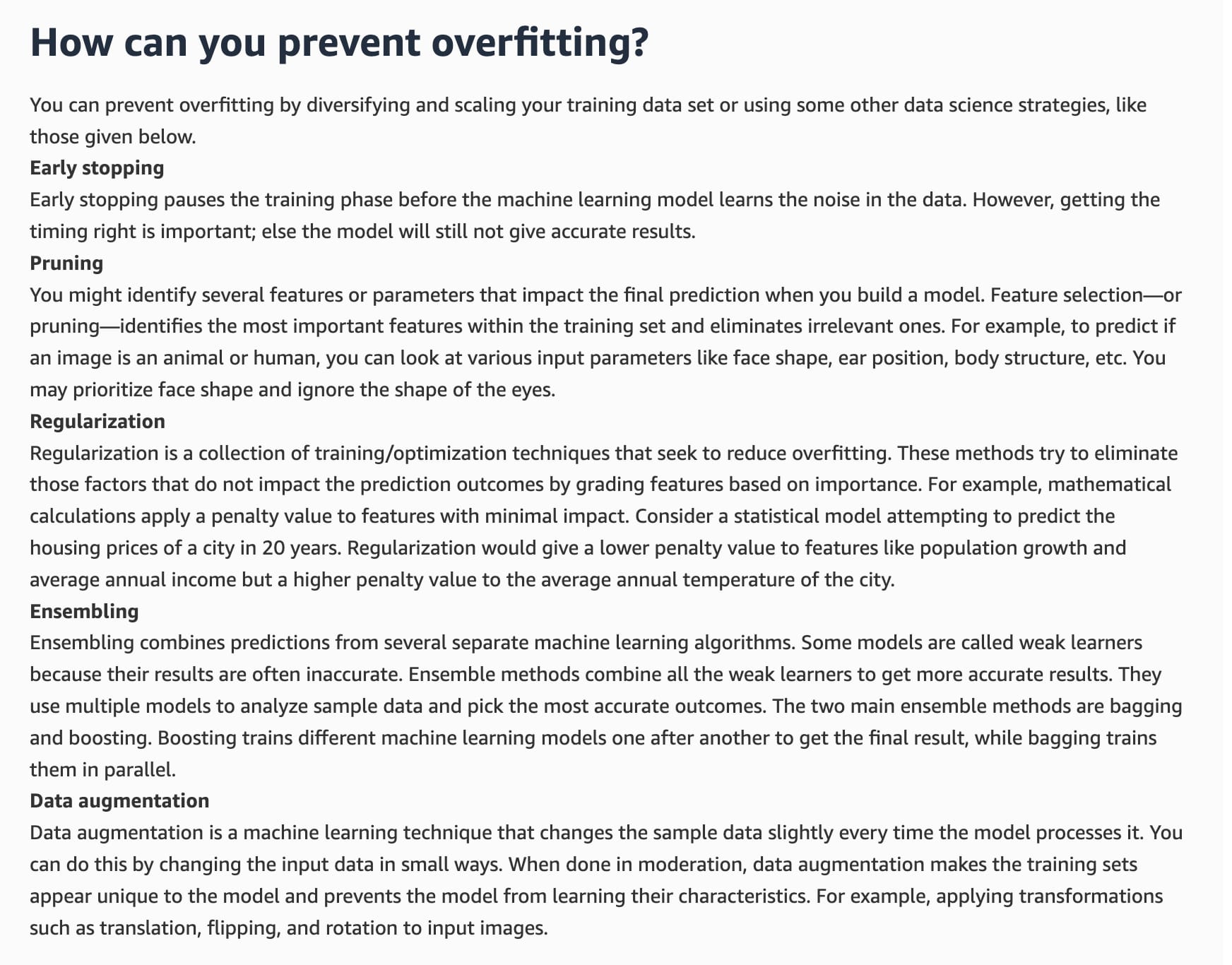
A healthcare analytics company has developed a machine learning model to predict patient outcomes based on historical medical data. During testing, the model demonstrates high accuracy and performs well on the training dataset, but once deployed in a real-world production environment, its accuracy drops significantly when processing new, unseen patient records. The company needs to improve the model's ability to generalize and perform well on new data, ensuring reliable predictions in the production setting.
What would be the most effective approach to fix this problem?
 via -
via - Question 6 Single Choice
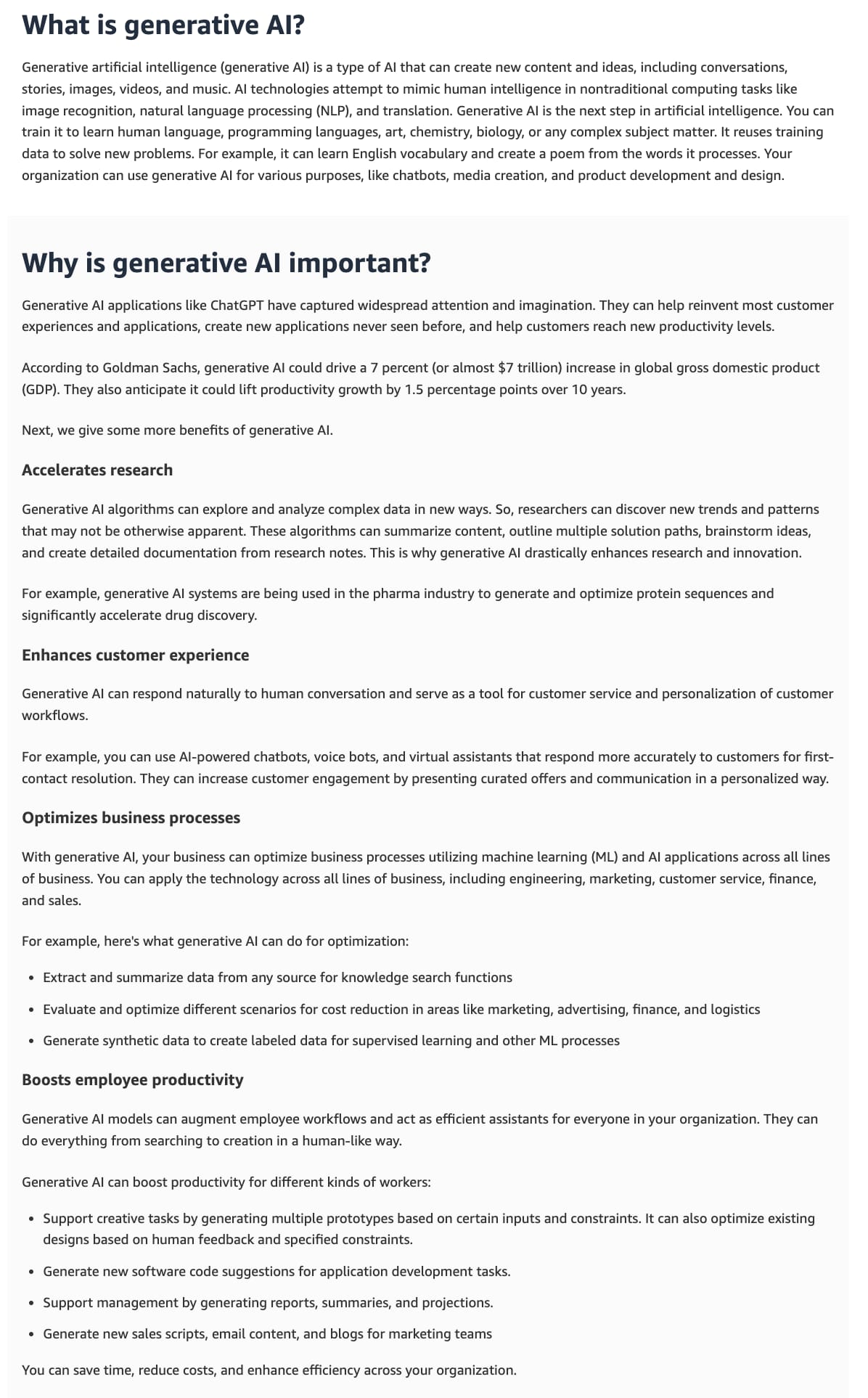
A healthcare company is considering leveraging generative AI to enhance its data analysis and patient care services. The team is exploring the AWS cloud environment as a platform for deploying generative AI solutions and wants to understand the key benefits of using AWS for these purposes. They are particularly interested in how AWS can support the scalability, security, and flexibility needed to integrate AI models into their existing workflows and handle large amounts of sensitive data.
What is one of the primary advantages of using generative AI in the AWS cloud environment?
 via -
via - Question 7 Single Choice
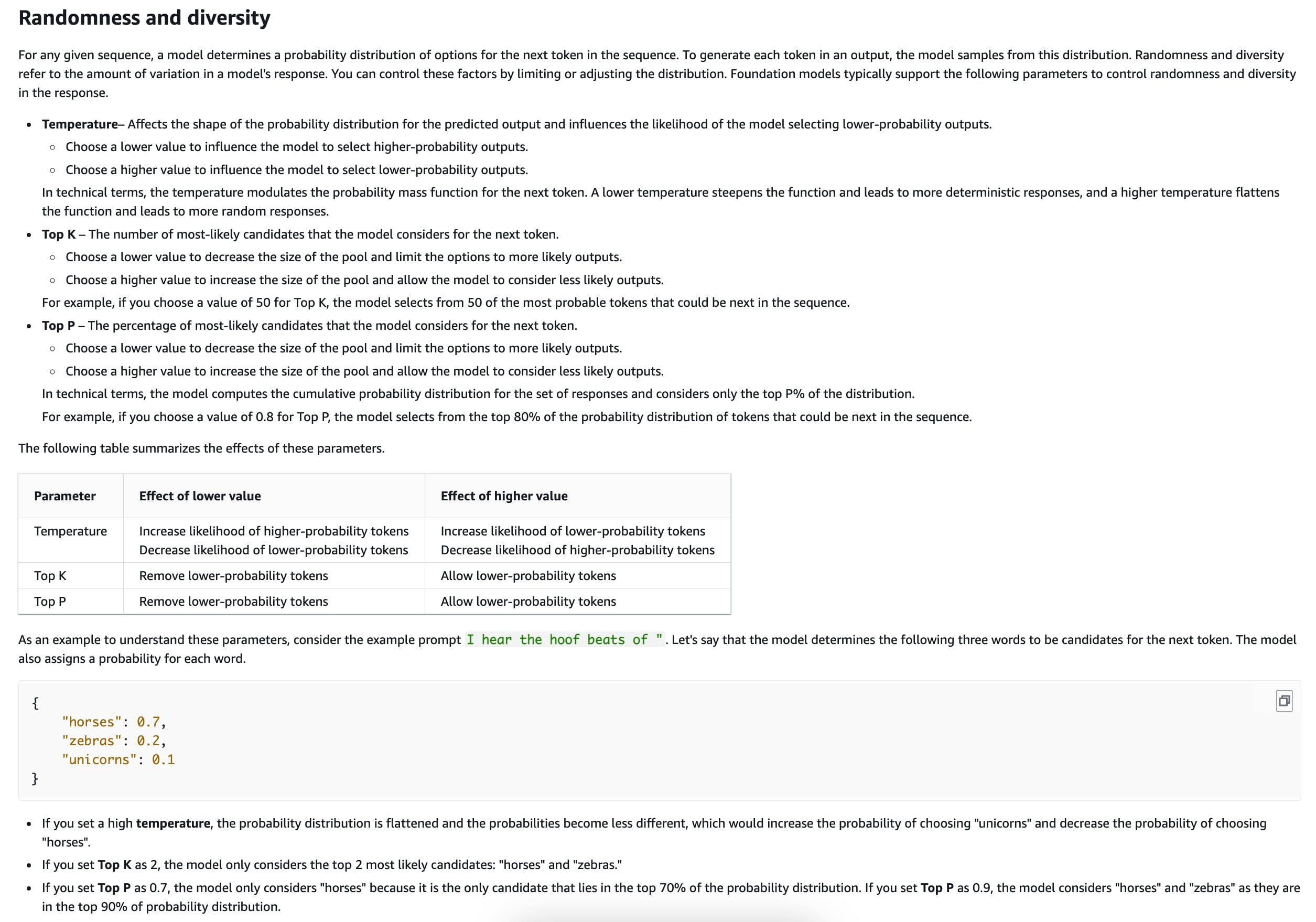
A company is using Amazon Bedrock and it wants to regulate the number of most-likely candidates considered for the next word in the model's output.
Which of the following inference parameters would you recommend for the given use case?
Question 8 Single Choice
A security company is evaluating Amazon Rekognition to enhance its Machine Learning (ML) capabilities. However, the data science team needs to identify scenarios where Amazon Rekognition may not be the most suitable solution. Understanding these limitations will help the team select the right tools for different aspects of their security system.
Given this context, which of the following use cases is NOT the right fit for Amazon Rekognition?
Question 9 Single Choice
A retail company has a collection of product catalogs in the form of PDFs and aims to provide the most current and relevant responses to customer inquiries through its Large Language Model (LLM) chatbot powered by Amazon Bedrock.
Which of the following approaches represents the most cost-effective solution?
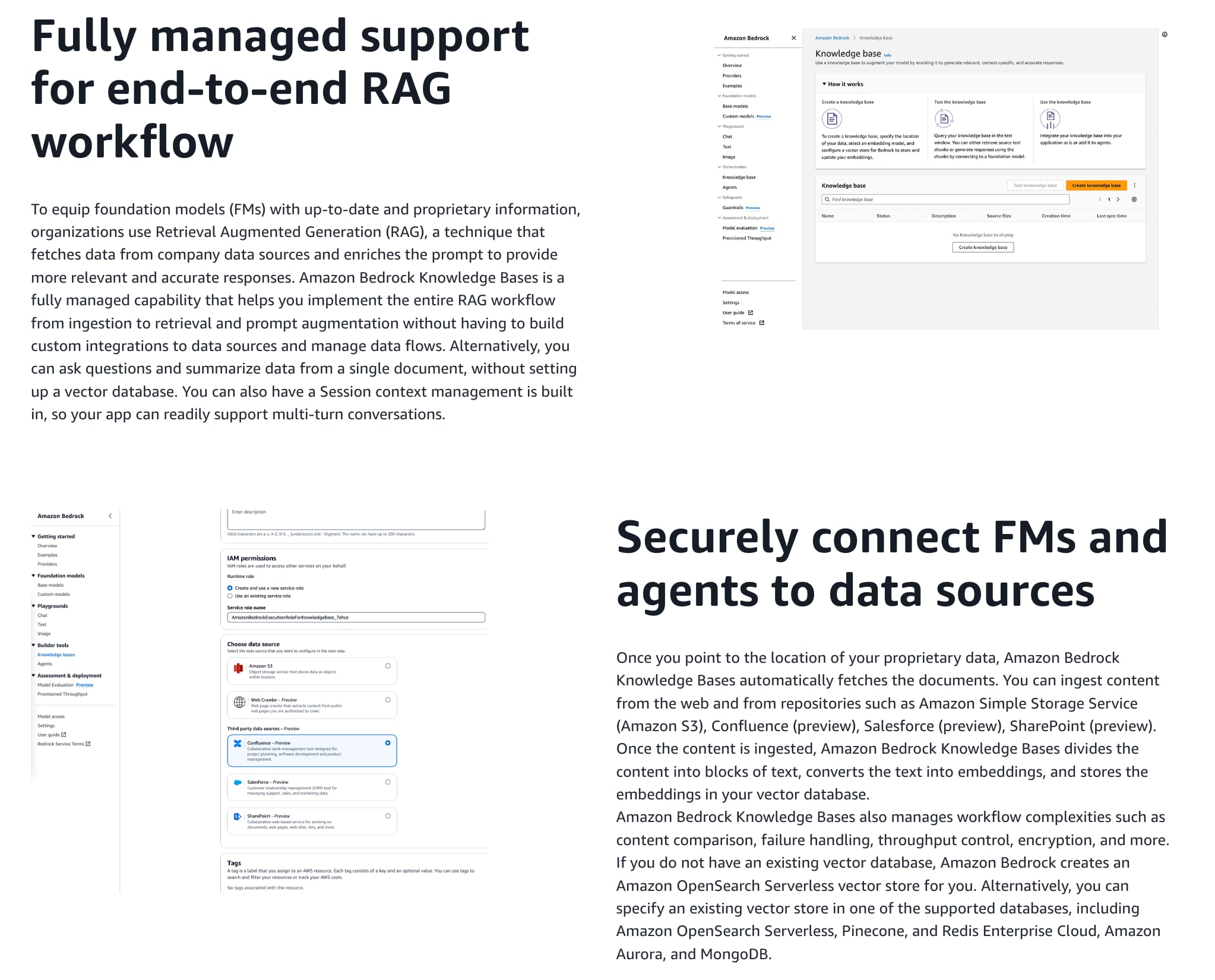 via -
via - Question 10 Single Choice
A marketing company is researching generative AI technologies to better understand how they work and what makes them suitable for automating creative tasks. Understanding the core principles of generative AI will help the company determine if it’s the right fit for their content creation needs.
Given this context, which of the following best describes generative AI?
Frequently Asked Questions
How realistic are the practice questions for the AWS Certified AI Practitioner exam?
The practice questions are designed to closely mimic the format and difficulty of the actual AWS Certified AI Practitioner exam, helping you become familiar with the types of questions you may encounter.
How should I use these practice questions to prepare for the exam?
To effectively prepare, integrate these practice questions into your study schedule, review the explanations for both correct and incorrect answers, and consistently take timed practice exams to gauge your readiness.
How many practice questions should I complete before taking the real exam?
It is recommended to complete a minimum of 300 to 400 practice questions, ensuring you cover various topics and question types, to build confidence and solidify your understanding of the material.
Can I track my progress while taking the practice exam for the AWS Certified AI Practitioner?
Yes, many practice exam platforms provide tracking features, allowing you to monitor your scores, identify weak areas, and adjust your study plan accordingly to focus on those topics.
What is the best strategy for reviewing the practice questions after attempting them?
After attempting the practice questions, review each one's explanation thoroughly, particularly those you answered incorrectly, to understand your mistakes and reinforce your knowledge of the correct concepts.