

Professional Data Engineer - Google Cloud Certified Practice Questions — Page 2

Preparing for the Google Cloud Professional Data Engineer certification requires a thorough understanding of the relevant concepts and practical applications in data engineering. This practice exam provides candidates with exposure to a diverse set of 658 real practice questions, designed to closely reflect the types of questions encountered on the actual certification exam. Engaging with these questions enables candidates to assess their knowledge and identify areas where further study may be necessary.
The practice exam also serves as an effective self-assessment tool, allowing candidates to gauge their readiness for the certification test. By simulating the exam experience, users can familiarize themselves with the format and types of questions they will face, helping to alleviate test anxiety and improve time management skills. This targeted approach allows for focused revision and boosts confidence in the subject matter, ultimately contributing to a more effective preparation strategy for aspiring data engineers.
These are independent practice questions modeled on publicly available objectives; they are not official exam questions and are not endorsed by the certification provider. Explanations are intended to teach the reasoning behind each answer.
Read the exam guide, objectives, prerequisites, and study planWelcome to your comprehensive resource for the Professional Data Engineer - Google Cloud Certified exam questions and answers. Here, you will find a curated list of 658 real practice questions designed to help you prepare thoroughly for the certification exam. This page is structured to facilitate your study process: each question is accompanied by detailed answers and explanations, allowing you to grasp the concepts and reasoning behind each solution.
To make the most out of this resource, consider the following study tips:
1. Familiarize Yourself with the Exam Objectives: Before diving into the questions, take the time to review the exam guide provided by Google Cloud. Understanding the key areas that the exam focuses on will help you prioritize your study efforts and concentrate on the most relevant material.
2. Practice Regularly and Review Responses: Consistent practice is crucial. As you work through the questions, make sure to review both correct and incorrect answers. Pay special attention to the explanations to gain deeper insights into the concepts, ensuring you don’t just memorize answers but truly understand the principles behind them.
3. Simulate Exam Conditions: As your exam date approaches, try to replicate the exam environment by timing yourself and completing practice questions in a single sitting. This will help you build confidence, improve your time management skills, and reduce anxiety on exam day.
By following these strategies, you’ll be well on your way to mastering the content and achieving your certification. Good luck!
Question 11 Single Choice
At WeatherSense Labs, you're developing a machine learning model to predict rainfall for a given day. Your dataset contains thousands of input features, and you want to explore ways to speed up model training while keeping the impact on accuracy minimal.
What approach should you consider?

Question 12 Single Choice
NovaTech Manufacturing is streaming real-time sensor data from its production floor into Cloud Bigtable. However, the team has observed severe performance issues, particularly with queries used to power real-time dashboards.
To improve query performance, how should the row key design be modified?
Question 13 Single Choice
You’re building a clothing recommendation system at StyleSense AI, which must adapt to changing fashion trends and user preferences over time. You've already implemented a streaming data pipeline that delivers new interaction data to the model as it becomes available.
How should you incorporate this new data into your model training strategy?
Question 14 Single Choice
At DataVista Corp, you've built a critical dashboard in Looker Studio 360 (formerly Google Data Studio) for your large internal team. The dashboard pulls data from BigQuery as its source. However, you've observed that the visualizations are not displaying data generated within the last hour.
What should you do to resolve this and ensure the dashboard shows the most up-to-date data?
Question 15 Single Choice
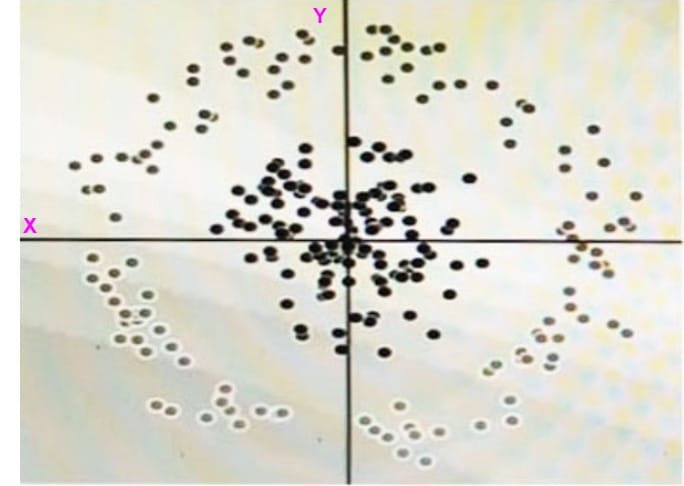
You have a dataset with two dimensions, X and Y, and each data point is shaded to represent its class. To accurately classify this data using a linear algorithm, you plan to introduce a synthetic feature. What should be the value of that feature?
Question 16 Single Choice
You are migrating a large set of files from a public HTTPS source to a Cloud Storage bucket for NexaData Corp. Access to the files is secured using signed URLs, and you’ve prepared a TSV file listing all the URLs. You initiated the migration using Storage Transfer Service (STS).
The transfer ran successfully for a while but then failed, and job logs show HTTP 403 errors for the remaining files. You verified that nothing changed on the source system. You now need to resolve the issue and resume the migration.
What should you do?
Question 17 Single Choice
Your company's customer_order table in BigQuery contains the order history for 10 million customers, with a table size of 10 PB. You're tasked with creating a dashboard for the support team to view order history. The dashboard includes two filters, country_name and username, both stored as string data types in the BigQuery table. However, applying filters to the dashboard's query results in slow performance.
SELECT date, order, status FROM customer_order
WHERE country = '<country_name>' AND username = '<username>'
How should you redesign the BigQuery table to facilitate faster access?
Question 18 Single Choice
You're utilizing Google BigQuery as your data warehouse. Users have reported that a seemingly simple query runs exceptionally slowly, regardless of when they execute it:
- SELECT country, state, city
- FROM [myproject:mydataset.mytable]
- GROUP BY country
Upon inspecting the query plan, you observe the following output in the Read section of Stage:1:

What is the most probable cause of the delay for this query?
Question 19 Single Choice
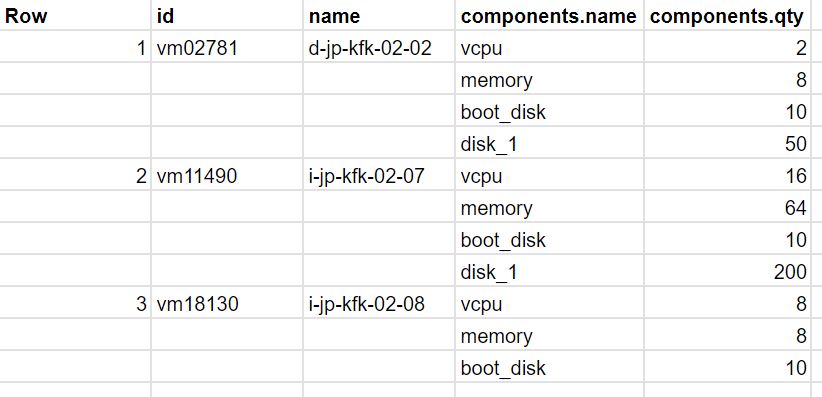
You possess an inventory of VM data stored in a BigQuery table called dataset.inventory_vm. To prepare the data for regular reporting in the most cost-effective manner, you need to exclude VM rows with fewer than 8 vCPUs. What action should you take?
Question 20 Single Choice
You are overseeing the data lake infrastructure for DataNova Corp, which is built on BigQuery. The data ingestion pipelines pull messages from Pub/Sub and write the incoming data into BigQuery tables. After rolling out a new version of the ingestion pipelines, you notice that the daily data volume stored in BigQuery has surged by 50%, even though the data volume in Pub/Sub hasn't changed. Only certain BigQuery tables show a doubling in the size of their daily partitions.
How should you investigate and resolve the root cause of this increase?
Frequently Asked Questions
How realistic are the practice questions for the Professional Data Engineer exam?
The practice questions are designed to closely mimic the format and difficulty level of the actual exam, providing you with an authentic preparation experience.
How should I use the practice questions to prepare for the exam?
You should take the practice questions regularly, review your answers to understand your mistakes, and focus on the topics where you need improvement.
How many practice questions should I complete before the real exam?
It's recommended to complete a significant portion of the practice questions, ideally at least 80-100, to solidify your understanding and readiness for the actual exam.
Can I use the practice questions to identify my weak areas?
Yes, by analyzing which questions you struggle with the most, you can identify weak areas and focus your study efforts more effectively.
Is there a time limit when taking the practice exam?
The practice exam does not have a strict time limit, allowing you to focus on answering questions thoroughly and understanding the material.