
Professional Machine Learning Engineer - Google Cloud Certified Practice Questions — Page 2

Taking the practice exam for the Professional Machine Learning Engineer - Google Cloud Certified certification is a critical step in your preparation journey. With a comprehensive set of 529 real practice questions, this exam provides candidates with an opportunity to experience the format and content of the actual certification test. Engaging with this extensive question bank allows for focused self-assessment, helping you identify areas of strength and pinpoint topics needing further review.
Each question is designed to reflect the kind of scenarios and knowledge areas you will encounter in the official exam, offering a realistic simulation of the test environment. As you work through the practice questions, you can develop effective strategies for time management and pacing, both essential for success. Additionally, analyzing your performance on this practice exam can inform your study plan, guiding you toward resources and topics that require further attention. By leveraging this tool, you can enhance your confidence and readiness, ensuring that you approach the actual certification exam with clarity and assurance.
These are independent practice questions modeled on publicly available objectives; they are not official exam questions and are not endorsed by the certification provider. Explanations are intended to teach the reasoning behind each answer.
Read the exam guide, objectives, prerequisites, and study planWelcome to the questions-and-answers listing page for the Professional Machine Learning Engineer - Google Cloud Certified exam. Here, you will find a comprehensive collection of 529 real practice questions designed to help you prepare effectively for this certification. Each question is a valuable resource to test your knowledge, identify areas for improvement, and build confidence as you approach the exam.
To make the most of this page, we recommend going through the questions methodically. Focus on understanding the reasoning behind each answer, whether you get it right or wrong. Actively engage with the material by noting down concepts or topics that require further study. It’s beneficial to revisit challenging questions regularly to reinforce your understanding and retention.
When preparing for exams like this, here are some study approach tips that can enhance your chances of success:
1. Create a Study Schedule: Allocate specific times for studying and stick to a routine. Consistent study periods will help you cover the material systematically without feeling rushed as the exam date approaches.
2. Utilize a Variety of Resources: Beyond practice questions, use books, online courses, and videos to gain diverse perspectives on machine learning concepts and the Google Cloud platform. This multifaceted approach helps deepen your understanding.
3. Practice with Real-world Scenarios: Wherever possible, apply your learning to practical situations. Engage in hands-on projects or case studies that require implementing machine learning solutions using Google Cloud. This practical experience will bridge the gap between theoretical knowledge and real-world application.
Good luck with your studies!
Question 11 Single Choice
You have developed a simple feedforward network on a very wide dataset. You trained the model with mini-batch gradient descent and L1 regularization. During training, you noticed the loss steadily decreasing before moving back to the top at a very sharp angle and starting to oscillate. You want to fix this behavior with minimal changes to the model. What should you do?

Question 12 Single Choice
Question 13 Single Choice
Question 14 Single Choice
Question 15 Single Choice
You are an ML engineer at a global car manufacture. You need to build an ML model to predict car sales in different cities around the world. Which features or feature crosses should you use to train city-specific relationships between car type and number of sales?
Question 16 Single Choice
Question 17 Multiple Choice
You trained a neural network on a small normalized wide dataset. The model performs well without overfitting, but you want to improve how the model pipeline processes the features because they are not all expected to be relevant for the prediction. You want to implement changes that minimize model complexity while maintaining or improving the model’s offline performance. What should you do?
Question 18 Single Choice
One of your models is trained using data provided by a third-party data broker. The data broker does not reliably notify you of formatting changes in the data. You want to make your model training pipeline more robust to issues like this. What should you do?
Question 19 Single Choice
Your team is working on an NLP research project to predict political affiliation of authors based on articles they have written. You have a large training dataset that is structured like this:
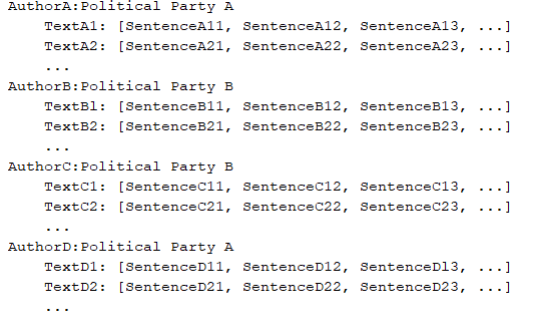
You followed the standard 80%-10%-10% data distribution across the training, testing, and evaluation subsets. How should you distribute the training examples across the train-test-eval subsets while maintaining the 80-10-10 proportion?
Question 20 Single Choice
Frequently Asked Questions
How realistic are the practice questions for the Professional Machine Learning Engineer exam?
The practice questions closely mirror the format and difficulty of the actual certification exam, providing a valuable way to assess your knowledge and readiness.
How should I use the practice questions to prepare for the exam?
You should regularly take practice questions, review the explanations for both correct and incorrect answers, and focus on areas where you struggle to enhance your understanding.
How many practice questions should I complete before taking the real exam?
It's recommended to complete as many practice questions as possible to build confidence and identify any weak areas, ideally aiming for at least 80-100 questions.
Can I track my progress while taking the practice exam?
Yes, most practice exam platforms provide tracking features to monitor your performance, helping you identify strengths and weaknesses over time.
Is it beneficial to retake the practice exam multiple times?
Absolutely, retaking the practice exam helps reinforce knowledge, improve retention, and increases familiarity with the question types you'll encounter in the actual exam.