
Microsoft Certified: Azure Data Scientist Associate - (DP-100) Practice Questions — Page 2

Preparing for the Microsoft Certified: Azure Data Scientist Associate (DP-100) exam requires a solid understanding of the relevant concepts and practical experience. This practice exam provides candidates with access to a comprehensive set of 630 real practice questions that reflect the content and difficulty level of the official certification test. Engaging with these questions allows candidates to assess their knowledge and identify areas that require further study.
By simulating the exam environment, candidates can hone their time management skills and familiarize themselves with the question formats they will encounter during the actual exam. The practice exam serves as a valuable tool for self-assessment, enabling candidates to gauge their readiness and confidence before sitting for the certification test. Additionally, by reviewing their performance on the practice exam, candidates can tailor their study plans to address specific weak points, ensuring a more targeted and efficient preparation process. Ultimately, this practice exam is designed to enhance both understanding and proficiency in the topics that are critical for success in the DP-100 certification.
These are independent practice questions modeled on publicly available objectives; they are not official exam questions and are not endorsed by the certification provider. Explanations are intended to teach the reasoning behind each answer.
Read the exam guide, objectives, prerequisites, and study planWelcome to the questions and answers listing page for the Microsoft Certified: Azure Data Scientist Associate - (DP-100) certification. Here, you'll find a comprehensive collection of 630 real practice questions designed to help you prepare effectively for the exam. These questions cover a wide range of topics relevant to the certification, allowing you to gauge your understanding and identify areas that may require further study. As you navigate through this resource, consider using it as a diagnostic tool: attempt to answer the questions without looking at the answers first to assess your current knowledge, then review the correct answers and explanations to deepen your understanding.
To enhance your study approach for the Azure Data Scientist Associate certification, consider these tips:
1. Focus on Practical Application: Hands-on experience is crucial. Work on real-world data projects using Azure tools to solidify your understanding of data science concepts and techniques.
2. Join Study Groups: Collaborating with peers can provide different perspectives and insights. Discussing complex topics and explaining concepts to others can strengthen your own understanding.
3. Utilize Official Resources: Make sure to refer to Microsoft’s official learning paths and documentation. These resources are tailored to the certification and can provide a solid foundation for studying.
By using these resources effectively and adopting a structured study approach, you'll be well-equipped to tackle the certification exam confidently.
Question 11 Single Choice

Question 12 Single Choice
Question 13 Single Choice
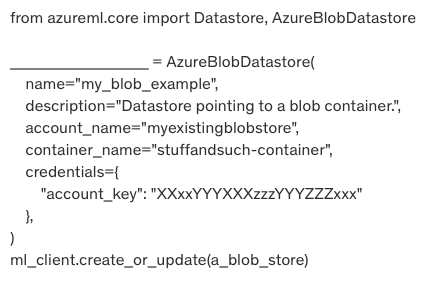
You are tasked with creating a datastore in Azure Machine Learning using Python SDK. Fill in the blank in the following Python SDK code block that correctly instantiates an Azure Blob Datastore:
Question 14 Single Choice
Question 15 Single Choice
Question 16 Single Choice
Question 17 Multiple Choice
Question 18 Single Choice
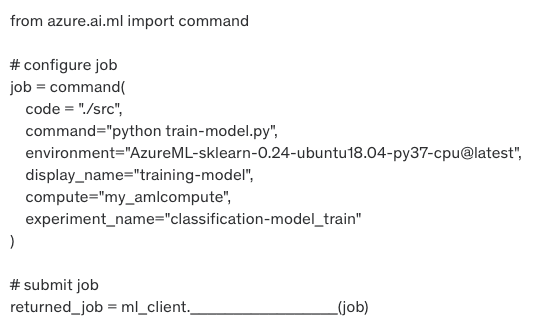
Consider this Python SDK code snippet used to configure and run a script as a command job in Azure Machine Learning. Complete the blank in the code to correctly submit the job using the ml_client object.
Question 19 Multiple Choice
Question 20 Single Choice
Frequently Asked Questions
How realistic are the practice questions for the DP-100 exam?
The practice questions are designed to closely mimic the format and difficulty of the actual DP-100 exam, providing you with a realistic testing experience to better prepare for the certification.
How should I use the practice questions to prepare for the exam?
You should systematically work through the practice questions, review explanations for both correct and incorrect answers, and identify areas where you need further study to reinforce your understanding of Azure Data Science concepts.
How many practice questions should I complete before taking the real exam?
While there is no set number, completing at least 80-100 practice questions can help gauge your readiness, but aim for thorough understanding rather than just quantity.
Can I retake the practice exam multiple times?
Yes, you can retake the practice exam as often as needed, providing a valuable opportunity to track your progress and improve your performance over time.
What should I do if I perform poorly on the practice questions?
If you perform poorly, review the topics related to the questions you missed and focus on studying those areas before retaking the practice questions.